your basket is empty
 View Basket
 Recover Basket

Actaea (Baneberry)
|
Baneberries and Bugberries (including the formerly separate genus Cimcifuga) are almost unknown wood plants from moist and humus rich soils in the northern hemisphere with some 25 species at present. They make racemes of small white flowers on long stalks above most ornamental dissected (feathered) and serrated leaves. Flowers are followed by very decorative bright colored berries in summer to autumn. All are long-lived perennials, once established do not disturb plants. Two red fruiting species are very difficult to be distinguished in nature: Actaea erythrocarpa Fischer and Actaea rubra (Aiton) Willd. In general Northamerican plants of Actaea rubra have slightly broader leaflets and a laxer infrutescence than East Asian plants of Actaea erythrocarpa. As even scientist are not sure if both forms are to be treated as separate species, we do not follow either this difference and offer all seeds under Actaea rubra. Sow flat from early autumn to early spring in any moist, yet well drained soil. Transplant rootstock in autumn after leaves have died down. Sometimes seeds make take up to two years to germinate successfully. They require a cooling period of several months prior to germination. Note: All parts (especially the colorful berries) are poisonous if ingested. All are USDA Climate Zone 6. 20 seeds per package. |
Articles
|
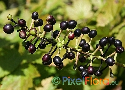
Actaea asiatica (Asian Baneberry)70 (100)cm, Asian Baneberry, makes upright spikes with white flowers above broadly dissected and serrated leaves, followed by glossy black berries on long pedicles (i.e. elongated stems) in mid summer. Seeds from a Korean population. Easily grown in any humus rich, slightly moist soil in a sunny to partially shaded spot. IV-V. |
| price (plus Shipping Costs) | ||||
|---|---|---|---|---|
| seed package1062 | € 7,99 | |||
|
||||
|
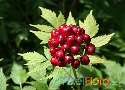
Actaea erythrocarpa (Asian Red Baneberry)50 (80)cm, Asian Red Baneberry is native of north-eastern Asia (Novosibirsk to Kamtschatka region) and North America with very ornamental bright red berries. Differs from Actaea rubra by its earlier fruits, which are almost completely round, and its dark green leaves which are broadly dissected and serrated. Growing in shaded, slightly moist spots in coniferous and deciduous forests. Plants sold in commerce usually are not this species but Actaea rubra. The seeds offered descend from the real type! V-VI. |
| price (plus Shipping Costs) | |||
|---|---|---|---|
| seed package1063 | € 3,99 | ||
|
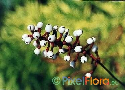
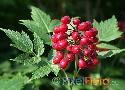
Actaea pachypoda (North American White Baneberry)100 (140)cm, North American White Baneberry (syn. Actaea alba), has pure white fruits on swollen, nicely contrasting reddish to pink pedicles on rather tall stalks which makes it distinct from the white fruited form of Actaea rubra. For any leafy, rich, slightly moist soil in partial shade to full sun. Plants sold in commerce usually are not this species but white fruited Actaea rubra. Our seeds descend from the real species! VII-IX. |
| price (plus Shipping Costs) | |||
|---|---|---|---|
| seed package 1064 | € 3,99* | ||
|
Actaea rubra (Red Baneberry)80cm, Red Baneberry (incl. Actaea erythrocarpa) makes terminal racemes of small white flowers followed by most ornamental crimson red, shiny berries in late summer above strongly dissected and serrated leaves. It is native of open spots in deciduous woods from north-eastern Asia (Novosibirsk to Kamtschatka region) and North America. Easily grown in any leafy, rich, slightly moist soil in partial shade. Seeds are from red-fruited plants only, yet some seedlings may naturally have red fruits. VI-VII. |
| price (plus Shipping Costs) | |||
|---|---|---|---|
| seed package 1065 | € 3,99* | ||
|
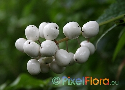
Actaea rubra f. alba (White Baneberry)80cm, White Baneberry (incl. Actaea erythrocarpa) makes terminal racemes of small white flowers followed by most showy snow white, shiny berries in late summer above strongly dissected and serrated leaves. It is native of open spots in deciduous woods from north-eastern Asia (Novosibirsk to Kamtschatka region) and North America. Easily grown in any leafy, rich, slightly moist soil in partial shade. Seeds are from white-fruited plants only, yet some seedlings may naturally have red fruits. VI-VII. |
| price (plus Shipping Costs) | |||
|---|---|---|---|
| seed package 1066 | € 3,99 | ||
|
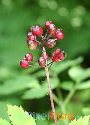
Actaea rubra ssp. arguta (Western Red Baneberry)50cm, Western Red Baneberry is an overall smaller subspecies from western North America with terminal racemes of small white flowers followed by ornamental crimson red, shiny berries in late summer above strongly dissected and serrated leaves. An extremely rarely cultivated plant which is easily grown in any leafy, rich, slightly moist soil in partial shade. VI-VII. |
| price (plus Shipping Costs) | |||
|---|---|---|---|
| seed package8938 | € 7,99 |

|
|
|
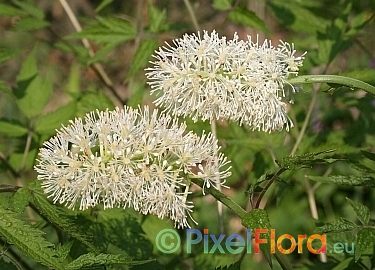
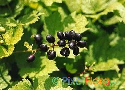
Actaea spicata (European Black Baneberry)100 (120)cm, European Black Baneberry, with glossy deep black fruits above broadly dissected and serrated leaves. Native throughout Europe and NW Asia, growing in woods in a leafy, rich, slightly moist soil in light shade. VII-IX. |
| price (plus Shipping Costs) | |||
|---|---|---|---|
| seed package 1067 | € 3,99* | ||


Recently Added


Top Sellers




- bank transfer
- giro pay
- sending cash


